

Summary
Medicare covers hospital care, doctor visits and a lot more, but not everything. This guide walks you through what Medicare Parts A, B, C and D cover, a few benefits you might not know about and what to plan for if senior living is on your radar.
Key takeaways:
- Medicare Parts A and B cover hospital care, doctor visits, many preventive services and other medically necessary care.
- Medicare Advantage is another way to receive Medicare benefits and may include extra dental, vision or hearing coverage.
- Medicare typically doesn’t pay for independent living, assisted living or other long-term custodial care.
- Moving to a senior living community doesn’t mean losing Medicare. Eligible medical services can still be covered.
- Medicare Open Enrollment runs from October 15 through December 7 each year.
In this guide:

What does Medicare cover?
The quickest answer: Medicare covers many medical services, but it isn’t designed to pay for every health or long-term living expense.
Medicare has four main parts. You may also hear about Medigap, which can help with some costs Original Medicare doesn’t pay.
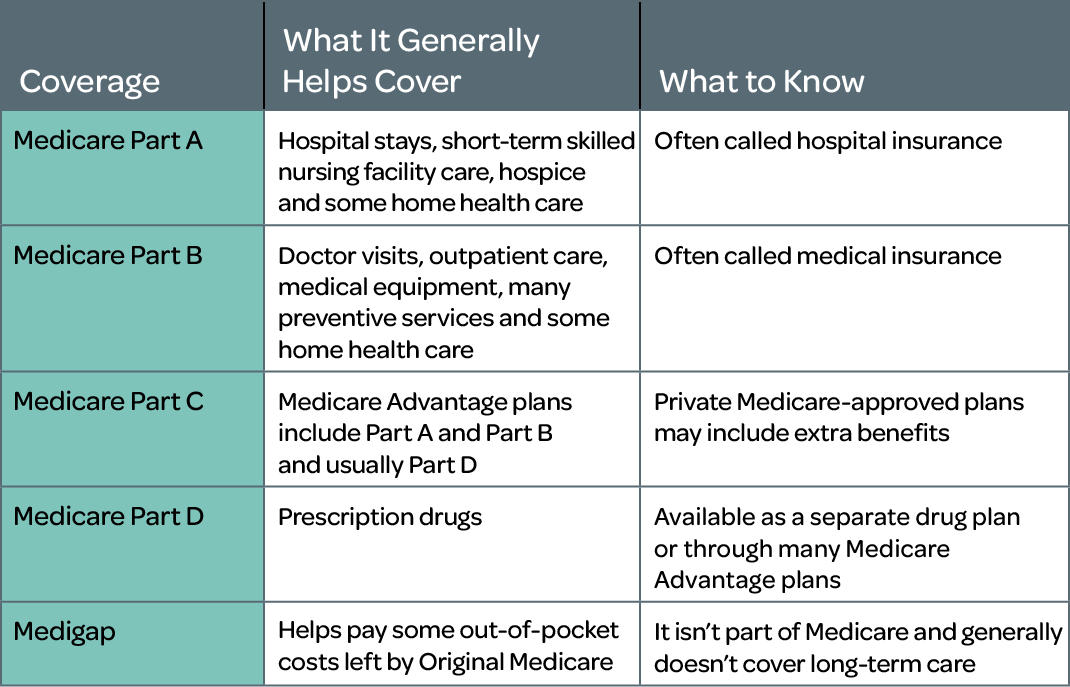
Parts A and B together are called Original Medicare. Medicare Advantage, also called Part C, is another way to receive your Medicare benefits through a private Medicare-approved plan.
Original Medicare vs. Medicare Advantage
With Original Medicare, you can usually see any doctor or hospital in the U.S. that accepts Medicare. You can add a Part D drug plan and, if eligible, purchase Medigap to help with some out-of-pocket costs.
With Medicare Advantage, you receive Part A and Part B benefits through a private plan. Most plans include drug coverage and many offer added benefits, but you may need to use doctors and hospitals in the plan’s network or get approval before certain services.
Before choosing or changing coverage, look beyond the monthly premium. Check your doctors, medicines, pharmacies, deductibles, copays and yearly out-of-pocket costs.
Surprising Medicare benefits many seniors don’t know about
Hospital stays and doctor appointments are only part of the picture. Medicare also covers services that are easy to miss and could make a real difference for you or someone you love.
1. A yearly Wellness visit
Medicare Part B covers a yearly Wellness visit to create or update a personalized prevention plan.
Your provider may review your medicines and health risks, check basic measurements and talk with you about screenings or other preventive services.
One important distinction: the Medicare Wellness visit isn’t the same as a routine annual physical. The Wellness visit is usually free when your provider accepts Medicare assignment, although additional services during the visit may cost extra.
2. Many preventive screenings
Part B covers many screenings designed to catch health problems early.
Depending on your age and health needs, Medicare may cover screenings for colorectal cancer, breast cancer, cardiovascular disease, diabetes, depression, osteoporosis and other conditions.
Many covered preventive services have no cost when eligibility requirements are met and the provider accepts Medicare assignment.
3. Vaccines
Medicare covers more vaccines than some people realize.
Part B covers flu, pneumococcal, COVID-19 and hepatitis B vaccines for eligible people. Medicare drug coverage also covers many recommended adult vaccines.
4. Training for someone helping with your care
If a spouse, adult child or other unpaid caregiver is helping with your treatment, they may be doing things they’ve never been trained to do.
Medicare Part B may cover caregiver training when it’s needed to help meet the health and treatment goals in your care plan.
Training may help a caregiver learn how to safely assist with treatment, mobility and other health needs.
5. A detailed check of memory and thinking
Concerned about changes in memory or decision-making?
Medicare Part B covers a separate cognitive assessment that can take a closer look at how someone is thinking and functioning.
A provider may review medicines and medical history, assess memory and thinking, create a care plan and connect you with specialists or community resources. You can also bring a spouse, friend or caregiver to the appointment.
6. Help from a registered dietitian
Medicare may help you get professional nutrition guidance.
Part B covers medical nutrition therapy for eligible people with diabetes, kidney disease or a kidney transplant within the last 36 months.
Services can include a nutrition and lifestyle assessment, counseling and follow-up visits. If you qualify, you pay nothing for covered medical nutrition therapy.
7. Mental health and chronic pain care
Medicare coverage isn’t limited to physical health.
Part B covers a range of outpatient mental health services, including counseling and psychotherapy. It also covers a yearly depression screening when requirements are met.
For people with persistent or recurring pain lasting more than three months, Part B may also cover monthly chronic pain management services. These can include pain assessment, medication management and care planning.
8. Physical and occupational therapy
Medicare Part B can help pay for medically necessary outpatient physical and occupational therapy.
Physical therapy can help restore or maintain movement after an illness, injury or surgery. Occupational therapy can help you perform everyday tasks such as getting dressed or bathing and may help maintain your abilities or slow a decline.
9. Certain health care in your home
If you meet Medicare’s requirements, home health coverage may include part-time skilled nursing, physical therapy, occupational therapy, speech therapy and certain medical supplies.
It may also include part-time help from a home health aide with tasks such as bathing or getting dressed when you’re also receiving qualifying skilled care.
Medicare doesn’t typically pay for 24-hour care at home, meal delivery or ongoing personal care when that’s the only help you need.
10. Telehealth
Some Medicare-covered care can happen without a trip to the doctor’s office.
Covered telehealth services can include caregiver training, cognitive assessments, depression screenings, nutrition therapy, psychotherapy, speech therapy and other services.
Through December 31, 2027, you can receive covered telehealth services from any location in the U.S., including your home. Medicare Advantage plans may offer additional telehealth benefits.
11. Hospice care
Medicare Part A covers hospice for eligible people who are terminally ill and choose comfort care instead of treatment intended to cure the terminal illness.
Covered hospice services can include nursing care, medical equipment, medicines for pain and symptom management, counseling and other services included in the hospice care plan.
Medicare generally doesn’t pay for room and board in a residential setting, even when hospice care is provided there.
What doesn’t Medicare cover?
This is where the surprises can start to add up.
Here’s what Original Medicare typically doesn’t cover.
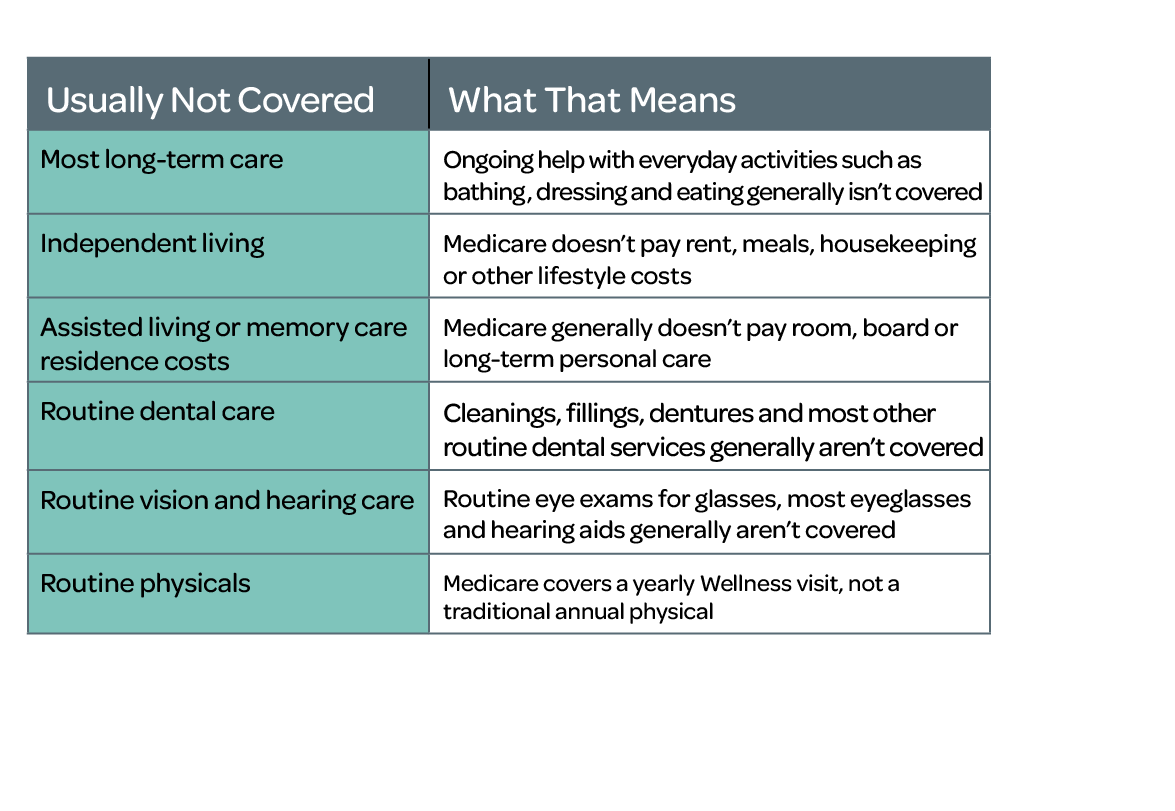
Medicare Advantage plans may offer some benefits Original Medicare doesn’t, including certain dental, vision or hearing services. Coverage varies by plan.
Myth vs. fact
Myth: Medicare pays for senior living.
Fact: Medicare pays for eligible medical care, not housing or everyday living costs.
Myth: A Medicare Wellness visit is the same as an annual physical.
Fact: They’re different services. Medicare covers the Wellness visit, but Original Medicare doesn’t cover routine physical exams.
Myth: If I move to senior living, I lose Medicare.
Fact: You can continue using Medicare for eligible health services while living in a senior living community. It just doesn’t pay the residential cost itself.
Does Medicare pay for independent living?
No. Medicare doesn’t pay the cost of living in an independent living community.
Independent living focuses on housing, dining, amenities and lifestyle rather than medical care. Medicare doesn’t cover everyday expenses such as:
- Rent
- Meals
- Housekeeping
- Transportation
- Social programs and activities
Moving to an independent living community doesn’t mean giving up Medicare.
Depending on your plan and eligibility, Medicare can still cover doctor visits, prescriptions, therapy, medical equipment, hospital care and certain home health services while you live in an independent living community.
If Medicare doesn’t pay for independent living, what does?
If you’re a veteran or a veteran’s spouse, learn about Holiday’s veteran benefits, including a $500 Welcome Home Credit and help navigating VA benefits for senior living costs.
Comparing your options?
Shirley ran the numbers on staying at home versus moving to Holiday. See what she found.
Want to run your own numbers?
What happens if your healthcare needs change?
Many people choose independent living while they’re still active and managing their own daily care.
But needs can change after an illness, injury or hospital stay.
If you need short-term rehabilitation, Medicare may cover eligible skilled nursing facility care, physical therapy, occupational therapy or other rehabilitation services when its requirements are met. Skilled nursing coverage is different from long-term custodial care and is typically limited to short-term skilled services.
At Holiday, residents remain free to choose their own outside health or personal care providers. Third-party providers are also available on-site at many communities. Holiday doesn’t provide or administer care, and services vary by location.
That flexibility may allow some residents to add support without immediately moving to a different type of senior living.
If care needs become more extensive, it may be time to compare independent living with assisted living, memory care or skilled nursing and decide which setting best matches those needs.
Holiday’s guide to independent living versus assisted living can help explain the difference.
How can you avoid unexpected Medicare costs?
A few simple checks can help you get more from your coverage and avoid surprises.
Medicare planning checklist
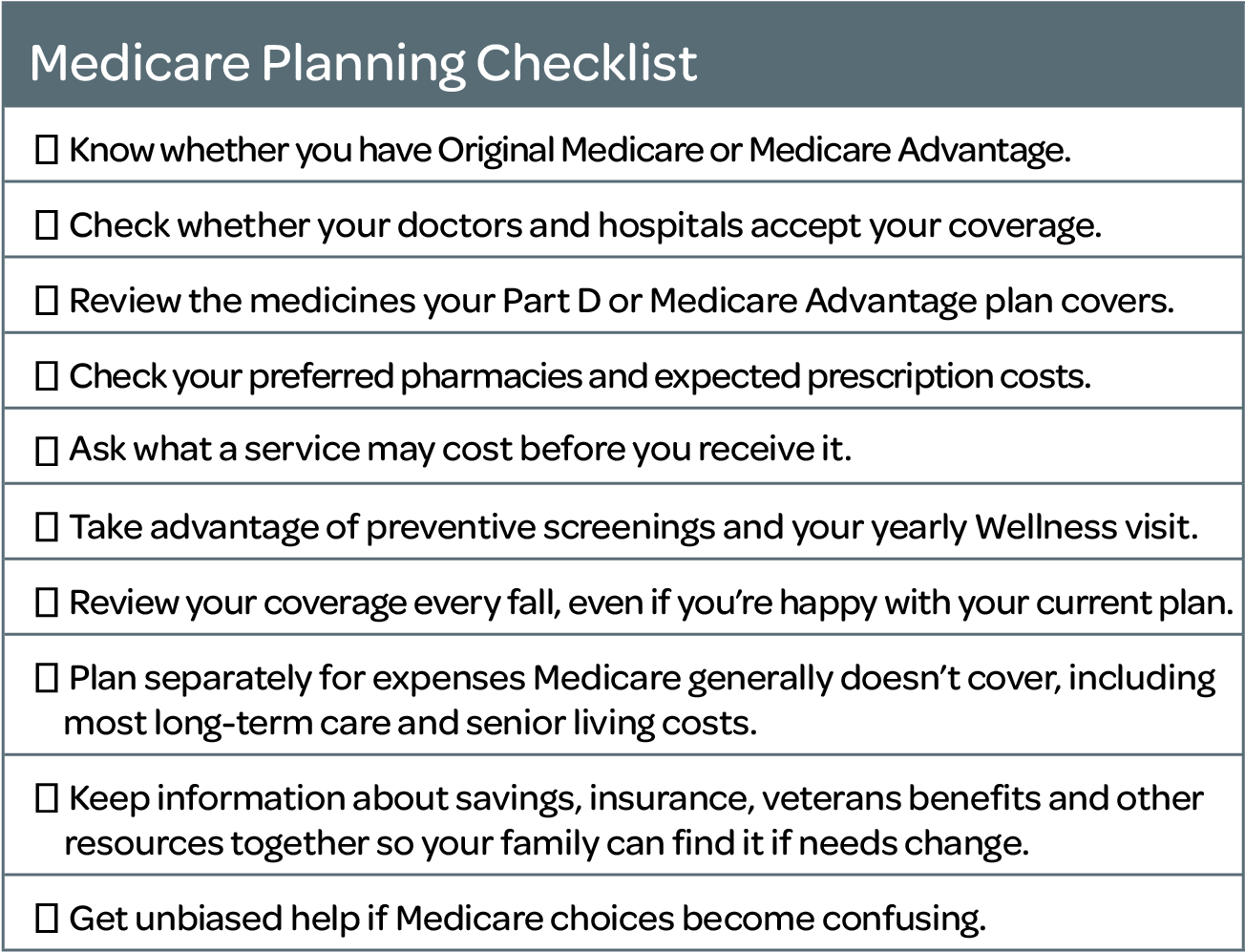
For Original Medicare, there’s no yearly out-of-pocket maximum unless you have additional coverage such as Medigap, Medicaid or qualifying employer or retiree coverage. Medicare Advantage plans do have yearly limits for covered Medicare services.
What should you check during Medicare Open Enrollment?
Medicare Open Enrollment runs from October 15 through December 7 every year.
This is the time to review Medicare Advantage and prescription drug coverage for the following year. Plans can change their costs, covered medicines, benefits and provider networks, and your own health needs may change too.
Medicare Open Enrollment dates for 2027 coverage
October 1, 2026: Start comparing your current Medicare health or drug coverage with 2027 plan options.
October 15, 2026: Medicare Open Enrollment begins.
December 7, 2026: Open Enrollment ends.
January 1, 2027: New coverage and plan changes take effect.
Before deciding to stay with your current coverage, ask:
- Are my medicines still covered?
- Are my doctors and hospitals still in the network?
- Can I keep using my preferred pharmacy?
- Have premiums, deductibles or copays changed?
- Have dental, vision or hearing benefits changed?
- What could I pay out of pocket next year?
- What’s changing for Medicare Part D in 2027?
For the standard Part D benefit in 2027:
- The maximum deductible increases from $615 in 2026 to $700 in 2027.
- The annual out-of-pocket cap for covered Part D drugs increases from $2,100 in 2026 to $2,400 in 2027.
Individual plans can vary, so review your plan’s costs and covered prescriptions for 2027.
Medicare FAQs
Does Medicare cover annual physicals?
Original Medicare doesn’t cover routine annual physical exams.
Part B does cover a yearly Wellness visit focused on prevention and creating or updating a personalized health plan. The Wellness visit isn’t the same as a traditional physical.
Does Medicare cover dental care?
Original Medicare doesn’t cover most routine dental care.
It may cover certain dental services when they’re connected to other covered medical treatment. Some Medicare Advantage plans offer additional dental benefits.
Does Medicare cover vision care?
Original Medicare doesn’t typically cover routine eye exams for glasses or most eyeglasses and contact lenses.
Medicare may cover certain eye care related to medical conditions, and some Medicare Advantage plans offer added vision benefits.
Does Medicare cover hearing aids?
Original Medicare doesn’t cover hearing aids or exams used only to fit hearing aids.
It may cover certain diagnostic hearing services. Some Medicare Advantage plans offer additional hearing benefits.
Does Medicare cover prescription drugs?
Yes, through Medicare Part D.
You can add a separate Part D plan to Original Medicare. Most Medicare Advantage plans also include prescription drug coverage.
Does Medicare cover vaccines?
Yes. Part B covers certain vaccines, and Medicare drug coverage covers many recommended adult vaccines. Coverage depends on the vaccine and your situation.
Does Medicare cover transportation?
Medicare doesn’t typically cover routine transportation for everyday needs.
Medicare can cover ambulance transportation when it’s medically necessary and certain requirements are met. Medicare Advantage plans may offer additional transportation benefits depending on the plan.
Does Medicare cover home health care?
Yes, if you meet Medicare’s requirements.
Coverage may include skilled nursing, physical therapy, occupational therapy, speech therapy and some part-time home health aide services. Medicare doesn’t usually cover ongoing personal care when that’s the only help you need.
Does Medicare pay for caregivers?
Medicare typically doesn’t pay someone simply to provide ongoing custodial care.
However, it may cover part-time home health aide services when you qualify for Medicare home health coverage and are also receiving skilled care. Part B may also cover training for a caregiver when it’s needed as part of a treatment plan.
Does Medicare cover physical therapy?
Yes. Part B can help cover medically necessary outpatient physical therapy when a qualified healthcare provider certifies that you need it.
Does Medicare pay for retirement communities?
Medicare doesn’t usually pay rent or other everyday living costs in an independent living or retirement community.
You can still use your Medicare coverage for eligible medical services while you live there.
If I move to an independent living community, do I lose Medicare?
No.
Your Medicare eligibility doesn’t disappear because you move to independent living. Your coverage can continue to pay for eligible medical services according to your Medicare plan.
Can Medicare and long-term care insurance work together?
They can cover different types of expenses.
Medicare typically covers eligible medical and short-term skilled services. Private long-term care insurance may help with some long-term services or personal care depending on the policy, benefit triggers and coverage purchased.
Review your individual policy carefully before assuming a cost will be covered.
Where to get free Medicare help
You don’t have to sort through Medicare choices by yourself.
For official Medicare information:
You can also contact your local State Health Insurance Assistance Program, or SHIP. SHIP programs provide free, unbiased Medicare counseling to Medicare-eligible people, families and caregivers.
Medicare note: Holiday by Atria doesn’t sell or recommend Medicare plans. Coverage, costs and benefits can vary by plan and change over time. Check Medicare.gov or your plan for current details.
Make retirement planning simpler
Understanding what Medicare will and won’t pay for can help you plan ahead and avoid surprises.
If you’re also considering independent senior living, Holiday by Atria offers a simpler lifestyle with meals, housekeeping, transportation and opportunities to connect included in the monthly rent.
Planning ahead doesn’t have to mean planning alone. Find a Holiday community nearby and schedule a visit. We’d love to show you around.
You might also like
Want to learn more about life at Holiday?